
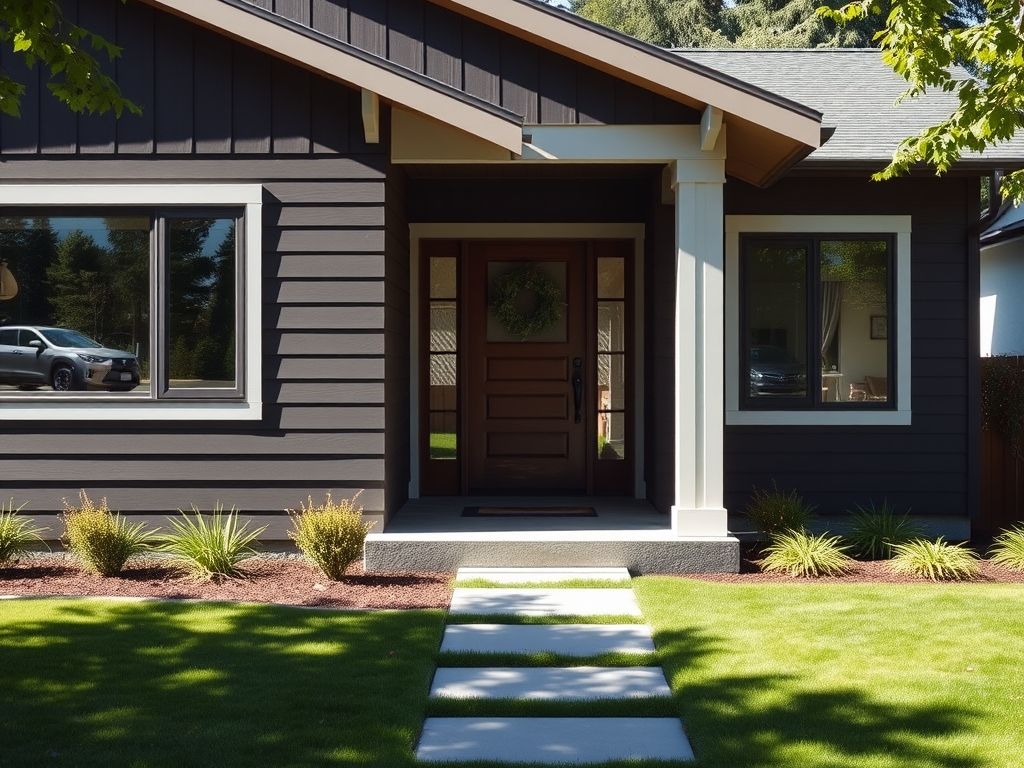
Navigating Bellevue's Competitive Housing Market: A Local Mortgage Guide
If you're buying a home in Bellevue WA, you already know this isn't a typical market. Prices are high, inventory is tight, and good listings move in days — often with multiple offers. That's exactly why choosing the right Bellevue mortgage lender matters more here than in most places.
I'm talking about more than just getting a rate quote. On the Eastside, your lender affects whether your offer gets accepted, whether your appraisal holds up, and whether you can close on time without drama. This guide breaks down what Bellevue really costs, how Bellevue home loan rates work, which loan fits your situation, and how to win a bidding war without overextending yourself.
Key Takeaways
| What You Need to Know | The Short Answer for Bellevue Buyers |
|---|---|
| Why go local? | An Eastside mortgage expert knows King County loan limits, Eastside appraisals, and local listing agents — and can vouch for you by phone. |
| What does it cost? | Expect high price points, King County property taxes, plus HOAs on condos. Most detached homes require conforming high-balance or jumbo financing. |
| 2025 loan threshold | The new conforming "high-balance" limit for 2027 is $1,063,750 for a single-unit home, so many Bellevue purchases need a jumbo loan. |
| Best loan types | Conventional and jumbo for most buyers; FHA, VA, and Washington down payment assistance for qualified first-time and veteran buyers; bridge loans for move-up buyers. |
| How to win offers | Get fully underwritten pre-approval, offer strong earnest money, have an appraisal-gap plan, and close fast with direct communication. |
| When to refinance? | Watch for a meaningful rate improvement, a chance to drop PMI, or a cash-out opportunity for renovation in this high-appreciation market. |
Why Does Working With a Local Bellevue Mortgage Lender Matter?
What Makes Bellevue's Housing Market Different From the Rest of Seattle?
Bellevue isn't just Seattle's suburb anymore. With tech employers, top-rated schools, and Downtown Bellevue's condo boom, demand stays strong even when the broader market cools.
According to the U.S. Census Bureau QuickFacts, Bellevue's median household income is over $140,000, nearly double the national average. That income supports higher prices, but it also means competition. You can track live price, inventory, and competition trends on Redfin's Bellevue housing market data.
In practical terms, that means:
- Low inventory, especially for updated single-family homes under $1.5M
- Fast timelines with pre-inspections and escalation clauses
- Appraisal pressure when offers go over asking
- A heavy share of jumbo and high-balance loans
A lender who only closes loans in Ohio or Texas won't feel that urgency. A local does.
How an Eastside Mortgage Expert Gives You a Competitive Edge
An Eastside mortgage expert does three things an out-of-area lender usually can't.
First, we structure your loan for this market. That includes King County conforming limits, jumbo reserve requirements, condo project approvals in Downtown Bellevue, and appraisal realities in Somerset versus Crossroads.
Second, we speak the local language. Listing agents in Bellevue, Kirkland, and Redmond know which lenders actually close on time. When your Bellevue mortgage lender calls the listing agent to confirm you're fully vetted, income-verified, and ready to close, that carries weight.
Third, we're available. No ticket system. No 1-800 queue. Direct answers on nights and weekends when offers are due.
Pro Tip: Before you tour homes, ask your lender: "Will you call the listing agent for me when I make an offer?" If the answer is no, keep shopping.
Local Lender vs. Big Bank vs. Online Call Center: What's the Difference?
| Feature | Local Bellevue Mortgage Lender | Big Bank | Online Call Center |
|---|---|---|---|
| Pre-approval strength | Fully underwritten, income and asset verified | Often just pre-qualification | Automated, rarely reviewed by underwriter |
| Knowledge of jumbo, bridge, bank-statement loans | Daily business | Limited menu, overlays | Scripted, one-size-fits-all |
| Communication | Direct cell/email with one advisor | Branch handoffs | Different rep every call |
| Speed to close | 21-30 days typical, faster with full approval | 30-45+ days, committee delays | Unpredictable, time-zone issues |
| Listing agent trust on Eastside | High | Mixed | Low |
Troy Gamble's model was built specifically to solve that last row. With 28+ years lending in Washington and 1,800+ families served, you work directly with Troy — not a call center. You can learn more on the Bellevue mortgage lender home loan page about how that local process works.
What Does Buying a Home in Bellevue WA Really Cost?
Current Bellevue Home Prices, Property Taxes, and HOA Costs
Bellevue is a city of micro-markets. A ballpark breakdown I share with buyers:
- Downtown Bellevue: Condos dominate, from starter one-bedrooms to luxury high-rises. HOA dues can run several hundred to well over $1,000 per month. Factor that into your debt-to-income ratio.
- West Bellevue / Medina-adjacent: Premium view lots and new construction. Almost always jumbo territory.
- Somerset, Lakemont, Newport Hills: Family move-up sweet spot. Many sales land in high-balance conforming to jumbo range.
- Factoria, Eastgate, Crossroads: More townhomes and relatively accessible single-family options. Best bet for first-time buyers using conventional or Washington assistance programs.
Beyond the purchase price, budget for King County property taxes, homeowner's insurance, and Washington closing costs like title, escrow, and recording fees. Condos add HOA dues and sometimes special assessments — your lender should run those numbers with you, not after you're under contract.
Understanding Bellevue Home Loan Rates and What Drives Them
Everyone asks about Bellevue home loan rates, but advertised rates rarely tell the whole story. Your actual rate depends on:
- Credit score and history
- Loan type and term (30-year fixed, 15-year, ARM)
- Down payment and loan-to-value
- Property type (single-family vs. high-rise condo)
- Conforming vs. jumbo loan amount
- Points, lender credits, and lock timing
Pro Tip: Don't chase the lowest online rate without asking what's behind it. Is it buying two points? Is it for 800 credit with 40% down? A transparent Loan Estimate from a local advisor beats a teaser rate every time.
How Much Income and Down Payment Do You Need to Compete?
There's no single income number, because it depends on price, debts, and down payment. But here's how competitive buyers typically approach it:
- Conventional buyers: 10-20% down is common in Bellevue to keep monthly payments manageable and offers strong. Less than 20% means private mortgage insurance, which is workable but adds cost.
- Jumbo buyers: Many jumbo investors want 10-20% down plus 6-12 months of reserves. Strong credit helps significantly.
- First-time buyers: According to the National Association of Realtors 2024 Profile of Home Buyers and Sellers, first-time buyers made up just 24% of all buyers, the lowest share on record. In Bellevue, first-timers often succeed with townhomes, condos, or assistance programs — and a very clean pre-approval.
Lenders look at housing ratio and total debt ratio, not just salary. If you carry student loans, auto payments, or tech RSU income, get those reviewed early so there are no surprises.
 ## Which Loan Options Are Best for Bellevue Buyers?
The right loan isn't about what's popular. It's about your price point, employment, down payment, and timeline. Here's how I break it down for Eastside clients.
| Buyer Profile | Loans to Consider | Why It Fits |
|---|---|---|
| Move-up buyer $800K-$1.2M | Conventional, high-balance conforming | Keeps costs lower than jumbo if you fit under limits |
| Luxury / $1M+ buyer | Jumbo | Built for high-value Eastside homes, flexible terms |
| First-time buyer | Conventional low down, FHA, down payment assistance | Lower entry cost with guidance on PMI and reserves |
| Veteran / active-duty | VA loan | 0% down option with no monthly PMI |
| Self-employed / tech contractor | Bank statement loan | Qualify on deposits, not just W-2s |
| Own a home but need to buy first | Bridge loan | Buy before you sell without contingent offer |
Infographic by SiteLift
Conventional and Jumbo Loans for High-Value Eastside Homes
According to the Federal Housing Finance Agency (FHFA), the 2027 conforming loan limit for a single-unit home is $855,400. For "High-Balance it's $1,063,750. You can verify current figures through the FHFA's conforming loan limit values.
What that means in Bellevue:
- Loan amount at or under $855.400 = conforming conventional
- Loan amount above that = jumbo or high-balance, depending on county and program
Many Bellevue detached homes require a jumbo loan. Jumbos have stricter appraisal, reserve, and credit requirements, but they also offer competitive fixed and ARM options. If you're on the edge, an Eastside mortgage expert can model both scenarios — slightly larger down to stay conforming versus going jumbo.
FHA, VA, and Washington State Down Payment Assistance Programs
Not everyone buying on the Eastside is buying $2M new construction. For condos, townhomes, and first homes in Factoria or Crossroads, these programs open doors:
- FHA loans: 3.5% down minimum with qualifying credit. Great for buyers rebuilding credit or with limited savings. You'll want to review FHA requirements through HUD's homebuying and FHA loan resources.
- VA loans: Earned benefit for veterans and eligible service members. Often 0% down with no monthly mortgage insurance and competitive rates. Check eligibility through the VA's home loan eligibility center.
- Washington State Housing Finance Commission (WSHFC): Down payment assistance and first-time buyer programs for income-qualified households. Explore options on the Commission's homebuyer programs page.
These aren't automatic approvals — property type, condo approval, and income limits matter. That's where local guidance saves weeks.
Bridge Loans and Creative Solutions for Move-Up Buyers
The toughest Bellevue buyer is often the one who already owns a home. You can't sell first and risk being homeless, but sellers won't accept a home-sale contingency.
That's why bridge loans are one of Troy Gamble's specialties. A bridge lets you tap equity from your current home for the down payment on the next one, then pay it off when you sell. Pair that with a fully underwritten approval and you can offer as a non-contingent buyer.
For self-employed borrowers — consultants, founders, Amazon and Microsoft contractors — bank statement loans can also help when tax returns don't reflect real cash flow.
You can meet Troy Gamble and review his consultative approach if you want a second set of eyes on a tricky income or equity scenario.
How Can a Bellevue Mortgage Lender Help You Win a Bidding War?
This is where a Bellevue mortgage lender earns the fee. Money is important, but certainty closes deals.
Pre-Approval vs. Pre-Qualification: What Bellevue Sellers Want to See
Pre-qualification is a guess. Pre-approval — done right — is underwritten.
Bellevue sellers and listing agents want to see:
- Credit pulled and reviewed, not self-reported
- Income verified with paystubs, W-2s, or business docs
- Assets verified for down payment, closing costs, and reserves
- Employment and large deposits documented
- Loan type, down payment, and conditions clearly stated in the letter
Ask for a fully underwritten pre-approval, often called TBD approval. It takes more work upfront, but your offer looks almost like cash to a seller.
5 Steps to Strengthen Your Offer in a Competitive Market
- Get fully underwritten before you shop. Bring tax returns, paystubs, bank statements, and ID early.
- Increase earnest money. 1-3% signals commitment. Your lender will confirm funds are seasoned.
- Offer flexible timelines. 21-day close or rent-back can beat a slightly higher price.
- Have an appraisal-gap plan. Decide in advance how much cash you'll cover if the appraisal comes in low.
- Let your lender advocate. A quick call from your lender to the listing agent confirming file strength can tip a close race.
Buying a home in Bellevue WA is emotional. These steps keep you competitive without waiving protections blindly.
Appraisal Gaps, Earnest Money, and How to Close Fast
Appraisal gaps are common when bidding over asking. Example: you offer $1,250,000 on a home that appraises at $1,220,000. That $30,000 gap has to come from cash, a renegotiation, or a loan restructure — your lender should walk you through all three before you sign.
Earnest money is at risk if you walk without a contractual reason, so never stretch beyond what your lender has vetted. And speed matters: choose a lender who orders appraisal immediately, discloses promptly, and answers the escrow team the same day.
When Should Bellevue Homeowners Consider Refinancing?
Refinancing on the Eastside is often about strategy, not just rate.
Rate-and-Term vs. Cash-Out Refinancing on the Eastside
- Rate-and-term refinance: Replace your current rate or term without taking cash out. Common triggers are dropping rate by roughly 0.75-1%, removing PMI after appreciation, or moving from an ARM to fixed.
- Cash-out refinance: Tap equity for renovation, debt consolidation, or investment. In high-value Bellevue homes, even a modest appreciation can create meaningful usable equity.
Both require a fresh appraisal, income check, and cost-benefit math. A no-cost or low-cost refi with slightly higher rate can make sense if you'll move or refinance again soon.
Using Home Equity in a High-Appreciation Market
Bellevue homeowners are often equity-rich and cash-flow conscious. I've seen clients use equity to:
- Remodel a kitchen or add an office instead of upsizing
- Buy out a divorce settlement or family member
- Fund a rental purchase or ADU
- Consolidate high-interest debt after a move-up purchase
The key is keeping loan-to-value in a safe zone and preserving reserves, especially if you're in jumbo territory.
How to Monitor Bellevue Home Loan Rates for the Right Time
Don't try to time the absolute bottom. Instead:
- Know your current rate, balance, term, and PMI status
- Set a target rate where savings justify costs
- Check in with a local advisor quarterly, not just when headlines spike
- Compare APR, points, and lender credits — not rate alone
A trusted Bellevue mortgage lender will tell you when not to refinance. That honesty is worth more than a quarter-point teaser.
My Take: Why Local Still Wins on the Eastside
I've watched this market for nearly three decades, and if there's one pattern I trust, it's this: Bellevue rewards preparation and punishes shortcuts.
I get it — the online rate looks tempting. You click, you get a number in 30 seconds, you feel productive. But then the listing agent doesn't recognize the lender, the pre-approval letter is vague, underwriting asks for the same document four times, and closing slips a week. In a multiple-offer situation, that slip costs you the house.
When I work with buyers, I’d rather spend an extra hour upfront verifying RSUs, bonus income, or self-employment deposits than scramble during escrow. I’d rather call the listing agent myself and explain exactly how we verified funds than hope a PDF does the talking. And I’d rather tell someone not to stretch with an appraisal gap they can’t afford than push a deal through.
That direct, no-call-center approach isn’t old-fashioned. On the Eastside, it’s a competitive advantage. You deserve to know who is handling your loan, to reach them when it matters, and to walk into an offer knowing your financing will hold.
Troy Gamble
Ready to Talk Through Your Bellevue Home Loan Options?
If you're thinking about buying a home in Bellevue WA or reviewing Bellevue home loan rates for a refinance, start with a conversation — not a form.
At troygamble.com, you'll work directly with Troy Gamble, a local advisor with 28+ years helping Washington families with conventional, jumbo, FHA, VA, down payment assistance, and bridge loans. No handoffs, no call center, just clear numbers and fast, honest answers from pre-approval through closing.
 Bring your goals, your timeline, and your questions about neighborhoods, down payment, or jumbo thresholds. We'll map a plan that fits Bellevue — and fits you.
FAQ About Working with a Bellevue Mortgage Lender
What does a Bellevue mortgage lender do differently than a big bank?
A local Bellevue mortgage lender underwrites to Eastside realities — jumbo thresholds, condo approvals, appraisal gaps, and King County costs — and provides direct communication. Big banks often offer pre-qualifications rather than fully underwritten approvals, route you through multiple departments, and can't call the listing agent to advocate for your offer. That local accountability often means faster closes and stronger offers.
How do I choose the best mortgage lender in Bellevue, WA?
Look for Washington licensing, 10+ years of local purchase experience, transparent Loan Estimates, five-star reviews from Eastside buyers, and a fully underwritten pre-approval process. Ask if you'll work with one person start to finish, how fast they close purchases, and whether they handle jumbo, bridge, and self-employed loans in-house. Choose responsiveness and certainty over a teaser rate.
What are current Bellevue home loan rates and how can I get the best rate?
Bellevue home loan rates change daily based on bond markets, credit score, down payment, loan type, and property. To get your best rate, improve credit, document income and assets early, compare APR with points and credits, lock strategically, and work with a local advisor who prices for your exact scenario.
How much down payment do I need when buying a home in Bellevue WA?
Conventional loans can allow as little as 3-5% down, FHA allows 3.5%, VA allows 0% for eligible veterans, and WSHFC programs can help with assistance. In practice, many competitive Bellevue offers include 10-20% down plus reserves, and jumbo loans typically expect 10-20% down. Your ideal amount depends on monthly payment comfort, PMI costs, and offer strength — run all three with your lender.
Do I need a jumbo loan to buy a house in Bellevue?
Often, yes. According to the Federal Housing Finance Agency (FHFA), the 2027 conforming loan limit is $855,400 for a single-unit home. If your loan amount exceeds that, you'll need a jumbo or high-balance loan. With many Bellevue single-family homes priced well above $1M, jumbo financing is common. A local lender can show you whether a larger down payment to stay conforming or going jumbo saves you more.

Troy Gamble
Branch Manager & Mortgage Loan Officer · NMLS 40183
Helping Washington buyers navigate their home purchase with confidence.